Instant booking
Defined appointments where the patient knows what they need.
Typical · check-ups, treatments, therapy sessions
- Live diary sync
- Fixed pricing per treatment
- Rebooking and reminders
02Industry · Healthcare
Why this sector is different
Clinics, practitioners, aesthetics, therapy and care all share one constraint: supply is regulated and scarce. The marketplace has to prove who a practitioner is, show real availability and keep the record straight, before it can earn a booking.
Related concepts · Kinurture · Costhetix
Sector fit pending verification
02Why healthcare is different Three pressures · one design response
Aesthetics, physiotherapy, dentistry, therapy and home care all put a regulated person in front of a patient. Everything else in the design follows from proving that person is who they say they are.
A design requirement: registration, insurance, qualifications and reviews visible at the moment of decision, not buried in a profile.
A practitioner’s diary is what the marketplace would sell. If it is not live, the product is offering time it cannot honour.
Consent, notes, follow-ups and cancellations are design constraints. Data protection belongs in the product, not only on a policy page.
03How healthcare is transacted Three models · often combined
These are transaction patterns to design around. They are often combined in one marketplace.
Defined appointments where the patient knows what they need.
Typical · check-ups, treatments, therapy sessions
A first appointment that produces a plan and a price. The plan becomes the contract.
Typical · aesthetics, dental, specialist referral
Ongoing care where the operator and the practitioner would share responsibility.
Typical · home care, long-term therapy, packages
04What we would build for healthcare
Search, payments and messaging are shared with every service marketplace. These six are where a healthcare marketplace needs its own design. They are proposals, not a list of checks already run.
Proposed sign-up flow for registration, insurance and qualification checks, with renewal rechecks before bookable supply goes live.
Proposed calendar sync with systems a clinic already uses, so only bookable time is shown.
Proposed structured intake, consent capture and notes, shaped around the data protection this sector requires.
Proposed plans with itemised pricing, a deposit on acceptance, and a path from first visit to a course of care.
A trust layer at the moment of decision, and a complaints path that ends with a person.
Rebooking, reminders and practitioner tools so the platform is the easier place to manage the next appointment.

The metric that matters
Fig. 02 Illustrative marketplace planning session
05Questions from healthcare operators Verification · diaries · records · platforms
The proposed design would check professional registration, insurance and qualifications at onboarding against the relevant register, then recheck them on renewal. This is a product requirement, not a claim about an existing healthcare platform.
Where a clinic system exposes a calendar or API, the proposal is to sync availability. Where it does not, the proposal is a practitioner-managed diary with reminders so the marketplace only sells time it can honour.
As a design constraint from the start: minimum data, clear consent, retention rules and access controls. A feature that needs a data-protection review should be flagged before it is built. This page does not describe a completed compliance programme.
Off-the-shelf booking tools cover simple appointments. Consultation-led and managed care often outgrow them. The useful next step is to show where the current platform stops.
06Related concepts and notes Sector fit pending verification
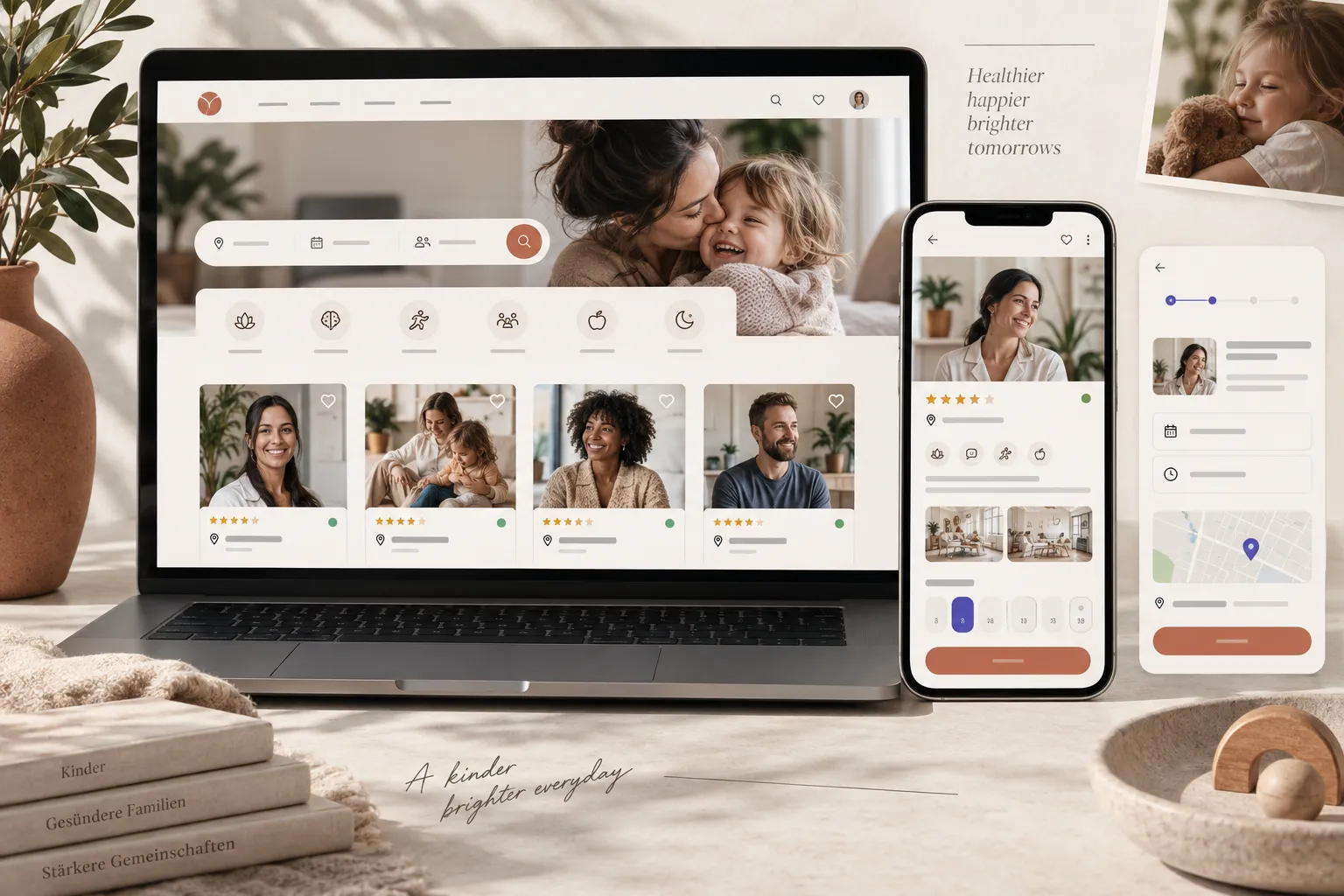
06 Aesthetics services marketplace

Project role pending verification
View projectDesign
Upcoming note
Operations
Upcoming note
These notes are not published yet. Read the journal.
12Start a conversation
What happens
A short call to understand the model, the stage you are at and whether one of the starting points fits. No deck, no pitch.